Commercial Waste Earls Court: Recycling & Sustainability
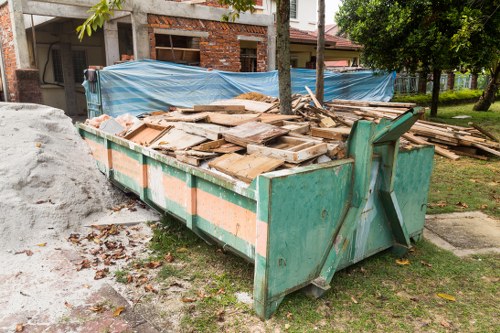 At Commercial Waste Earls Court we champion an eco-friendly waste disposal area model tailored to the dense urban streets and busy businesses of Earls Court. Our approach balances practical collection schedules with ambitious environmental goals, emphasising source separation, reduced landfill, and optimised logistics for all types of commercial refuse. This page explains our sustainability priorities, targets and local partnerships that make the sustainable rubbish area vision a reality.
The Earls Court area sits across borough lines and benefits from coordinated schemes led by the Royal Borough of Kensington & Chelsea and neighbouring Hammersmith & Fulham. Their boroughs' approach to waste separation encourages clear bins for paper, mixed recycling and food waste, and many local businesses already follow the same systems. By aligning our services with local policies we ensure that Earls Court commercial waste is processed correctly and efficiently.
Our Recycling Percentage Target
We have set a measurable goal to increase recycled materials from Commercial Waste in Earls Court: a 70% recycling rate for all collected commercial materials by 2028. This target covers cardboard, paper, metals, glass, mixed dry recycling and segregated food waste where applicable. Key actions to reach this target include monthly reporting, staff training for tenants, and visible bin signage to improve capture rates.To support the target we operate a clear materials flow: separate collections for dry recyclables, organics, and residual waste. We advise businesses on on-site segregation and provide tailored bin layouts so that staff and visitors can recycle correctly. Simple, consistent labelling reduces contamination and increases the proportion of material that can be processed at recycling facilities.
Our logistics are also part of the sustainability equation. We prioritise consolidation of loads to avoid unnecessary trips across the city and deploy low-emission routing software to minimise mileage. Low-carbon vans and Euro 6 compliant vehicles form the backbone of our fleet; where feasible we are rolling out electric and hybrid collection vehicles to lower local air pollution and CO2 emissions for Earls Court commercial waste collections.
Local Transfer Stations & Materials Processing
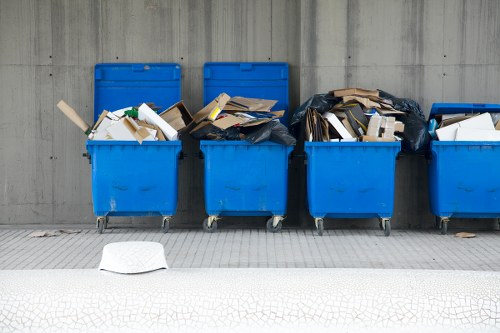
Collected materials are taken to local transfer stations and Materials Recovery Facilities (MRFs) serving west and central London, including those that process waste for Kensington & Chelsea and Hammersmith & Fulham. Using nearby transfer stations reduces haul distances and speeds up processing times, keeping our sustainable rubbish area network efficient. We also segregate hazardous and specialist streams for dedicated treatment at licensed centres.Partnerships are central to our model: we collaborate with charities to divert reusable goods away from landfill and keep useful items in circulation. Commercial Waste Earls Court runs scheduled furniture and textiles pickups for donation, working with local charities and social enterprises that collect, refurbish and redistribute items to those in need. These partnerships extend the life cycle of commercial surplus and reduce overall waste volume.
We maintain formal agreements with several community organisations to accept sorted donations, appliances and packaging materials. Where goods are not suitable for reuse, our partners often salvage materials for recycling—this circular approach helps create a resilient, community-focused sustainable rubbish area in Earls Court.
Alongside reuse initiatives, we provide businesses with practical guidance on waste prevention and resource efficiency. Simple changes—switching to reusable serviceware, reducing single-use packaging, and buying in bulk—contribute directly to improved recycling percentages and a smaller carbon footprint for Earls Court commercial waste streams.
 To support these operations we provide clear performance metrics: monthly diversion rates, contamination trends and vehicle emissions data so clients can see progress toward the 70% recycling target. We use these reports to recommend continuous improvements and adapt collection frequencies or container types as waste profiles evolve.
Our vehicle fleet strategy prioritises low-carbon vans and optimised routing to reduce emissions and noise impact in the dense streets around Earls Court Road and nearby commercial corridors. Where electric collection vans are not yet practical for heavier loads, hybrid alternatives and high-efficiency diesel units ensure lower local pollutants compared with older vehicles.
 In summary, the Earls Court commercial waste programme combines practical collection services with the ambition of creating a true sustainable rubbish area. By aligning with borough waste separation policies, using local transfer stations to shorten haul distances, partnering with charities to divert reusable goods, and investing in low-carbon vans and smart logistics, we deliver a measurable pathway to greener, cleaner streets. Our commitment is to keep improving capture rates, cut carbon emissions and support circular economy initiatives so that Commercial Waste Earls Court remains a leading example of urban waste sustainability.
