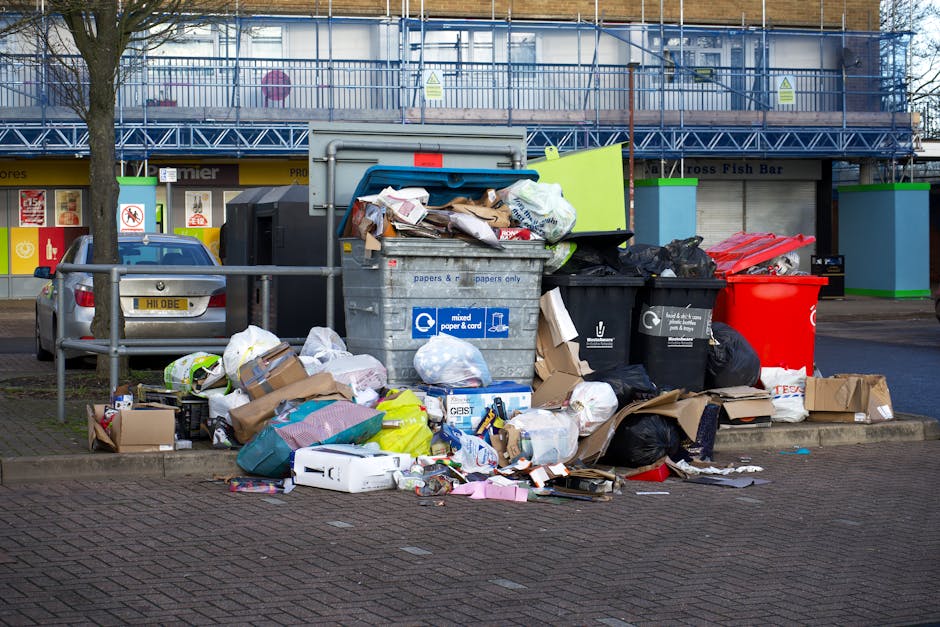
Commercial Waste Removal in Earls Court
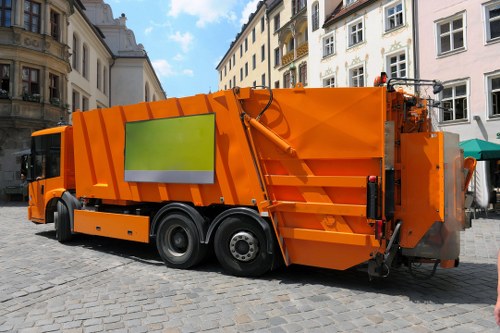
Commercial waste removal in Earls Court needs to be practical, orderly and suited to business premises that generate different kinds of non-domestic waste across the week. We handle collection for shops, offices, hospitality venues, studios and managed properties, with a focus on clear loading, sensible sorting and responsible disposal. The service is designed to help keep floors, back-of-house areas and storage rooms usable while waste is taken away without unnecessary disruption.
For many organisations, the right approach is not simply taking everything at once, but separating what should be reused, recycled or sent for specialist processing. Our business waste removal service is suited to routine clearances and one-off jobs where general mixed waste, packaging, fixtures or redundant office items need collecting. We also work with premises that prefer a more structured clear-out of stored material rather than a rushed lift-and-go removal.
Use the page sections below to understand the main work areas, including waste types, disposal choices and the way quotation details are usually prepared. If you need to arrange a collection, make a note of the items to be removed and ask for a quotation when you are ready. Clear descriptions of the load help us shape the right approach.
Business collections for day-to-day waste
Commercial premises often need waste removed in a way that fits around trading hours, loading access and building rules. The service can cover bagged rubbish, box-fill waste, broken items, packaging, mixed non-hazardous material and assorted contents from cupboards, stock rooms or staff areas. We keep the work focused on removing what has been set aside, then separating material where practical so that disposal follows the most suitable route.
For premises with regular turnover of packaging or discarded goods, planning the waste stream can matter as much as the collection itself. A simple inventory helps identify heavier items, awkward shapes and anything needing extra handling. Pricing and quotes are usually shaped by volume, weight, access, labour involved and any specialist disposal requirements, so a straightforward description of the load is useful before the work is arranged. If you are comparing options, think about how often waste builds up and whether a single clearance or a repeat collection is the better fit.
What this type of collection can include
Typical commercial loads may involve office paper waste, retail packaging, broken display pieces, redundant shelving, mixed general rubbish and other non-confidential waste from ordinary operations. When a business has several waste types in one place, it is usually more efficient to identify anything that should be separated early, especially if it includes electrical items, confidential paperwork or materials needing special handling. A tidier load is often easier to remove safely, and it can reduce avoidable delay during collection.
Office, furniture and equipment clearances
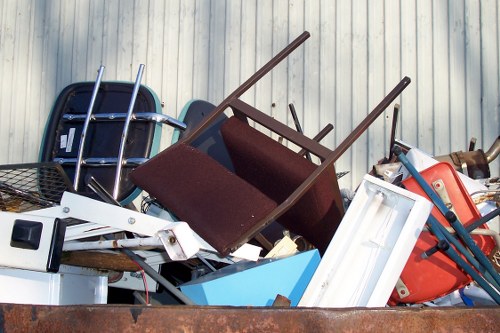
Office and workplace clearances usually involve a mix of desks, chairs, filing units, storage items and smaller pieces of redundant equipment. Our office clearance page covers the removal of furniture and contents from work areas where space needs to be recovered without leaving a trail of loose material behind. This kind of service is often best handled in stages, especially when desks, cabinets and boxed items must be moved from different rooms or floors.
Where furniture is the main issue, it can help to distinguish reusable pieces from damaged or obsolete ones. The furniture clearance service is suitable for mixed office and commercial furniture that is no longer needed on site, while the furniture disposal page is useful when the question is how those items are taken away and processed. Chairs, tables, shelving and similar bulky items are easier to deal with when access routes are checked and the load is described clearly in advance.
Some businesses also need items removed as part of an internal move, refurbishment or change of use. In those situations, it is sensible to note whether the clearance is confined to one room, several rooms or an entire floor. Simple preparation usually means identifying what stays and what leaves, and keeping any wanted documents, IT kit or personal effects separate from the waste load. That keeps the work focused and makes the removal easier to organise.
Specialist items and harder-to-handle waste
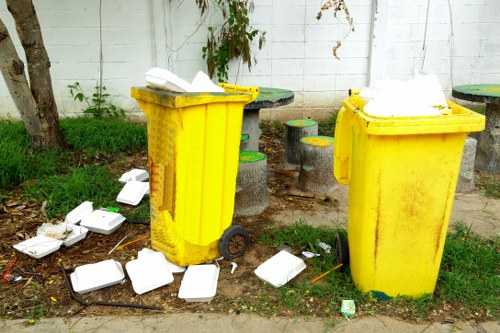
Some commercial waste cannot be treated as ordinary mixed rubbish because it needs different handling, different transport precautions or a specific disposal route. We provide removal for certain bulky or specialist item types where the contents and condition are suitable for collection. That includes appliance-related items, old refrigerated units and other large pieces that need moving with care rather than being left in a general waste area.
For items such as white goods or catering equipment, the relevant service page helps explain what can be taken and how it is usually handled. The fridge and appliance removal page is relevant where businesses have redundant cooling or domestic-style appliances to clear, while mattress and sofa disposal is more appropriate where soft furnishings have come from premises with guest, staff or waiting areas. Where a load includes mixed bulky waste, it is best to identify each category rather than calling everything general rubbish.
There are also occasions when waste contains potentially problematic material that should not be mixed into an ordinary collection. In those circumstances, a proper description matters more than a quick estimate. If something is fragile, contaminated, heavy or awkward to access, note it clearly and ask whether it needs separate treatment. That way the collection can be planned around the actual waste rather than around assumptions.
Confidential material and safer handling choices
Commercial waste is not always about volume; sometimes the issue is sensitivity, compliance or the need to keep information secure while items leave the premises. Confidential files, archived paperwork and record material should be identified before collection so they can be directed through an appropriate shredding route rather than mixed with ordinary waste. If your premises produce documents that can no longer be stored, sorting them from general rubbish is a sensible first step.
The confidential shredding page is relevant where paper-based material needs secure destruction, while the insurance and safety page gives a broader view of how handling and removal are managed with care on site. These considerations are especially useful when waste is being moved from offices, clinics, reception areas or any workspace where confidential information may be present. Privacy-conscious handling is about keeping the right items separate and making sure the chosen route matches the material.
For loads that contain awkward, heavy or potentially contaminated items, planning should always include access, lifting route and any local restrictions inside the building. A good quotation request does not need a long report, but it does need enough detail to reflect the actual work. If you are unsure whether an item should be treated as standard waste or specialist waste, describe it plainly and ask for guidance rather than assuming it can be bundled together.
Clearance for mixed premises and changing spaces
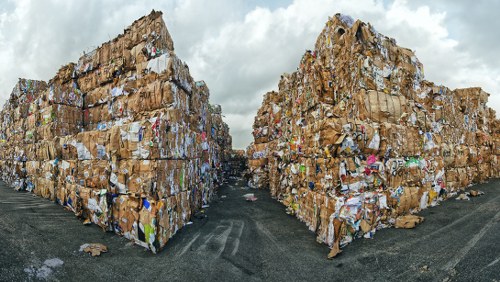
Not every commercial job is limited to one obvious waste type. Many premises end up with a combination of storage clutter, broken fixtures, old stock, packaging and furniture that all needs shifting at the same time. The home clearance and house clearance pages can be useful for understanding how larger mixed contents are approached when a property must be cleared thoroughly, while the flat clearance page is relevant for smaller, more compact spaces. Although the setting differs, the practical question is often the same: what is being removed, how much there is, and how easily can it be accessed?
Where business premises share that kind of mixed-content challenge, a staged approach can work better than trying to solve everything in one sweep. The garage clearance, loft clearance and garden clearance pages show how different spaces can require different handling because of access, headroom, moisture, weight or surface conditions. Commercial areas may not be domestic, but the same principles still apply: know what is there, decide what should go, and avoid unnecessary sorting on the day itself.
Useful details for a quotation are usually the type of premises, the main item categories, any stairs or limited access, whether parking or loading is awkward, and whether the work needs to be completed in a specific order. If you can identify those points in advance, the collection can usually be set up more efficiently and with fewer surprises for the people involved.
Disposal routes, recycling and responsible processing
Once waste has been collected, the remaining question is how it should be processed. Different materials may be separated for recycling, reuse, shredding, specialist disposal or general waste handling depending on what the load contains. The recycling and sustainability page explains the broader approach to diversion and material recovery, which is useful for businesses that want a clearer picture of what happens after items leave the site.
That is especially relevant when the waste stream contains a mix of recyclable packaging, reusable furniture components and items that can only be treated as residual waste. The aim is not to promise that every item will be recovered, but to make sure the removal path is matched to the load rather than handled as one generic pile. If you have a specific concern about how material should be separated, include it in the job notes so the collection can be planned accordingly.
For larger or more complex commercial clearances, it can help to think in terms of categories rather than single objects. One section may be general rubbish, another may be furniture, another may be paper or confidential material, and another may be any item needing separate handling. That structure makes the work easier to discuss and helps keep the process clear from the first quotation request to the final loading.
How to plan a commercial clearance
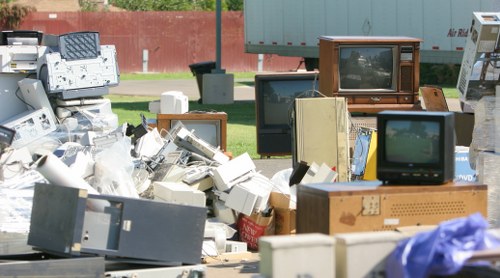
Before a job is booked, it is usually worth walking through the space and identifying the waste that genuinely needs to go. This does not have to be complicated. A simple note of rooms, item types, approximate quantity and anything heavy or delicate is usually enough to begin. If there are any items that should stay on site, keep them separate from the outset so there is no confusion on the day.
The book online page is a useful route when you are ready to make contact, and the contact us page is the clearest place to send a request for a quotation or ask a practical question. A short description often works better than a long explanation, provided it includes the right facts: what is being removed, where it is located and whether access is straightforward. For a more exact estimate, item lists and photographs can help show the scale and type of waste involved, especially where furniture, equipment or mixed contents are part of the job.
When you are ready, ask for a quotation and include the practical details that affect the collection. That keeps the process direct and helps make sure the service matches the waste you actually need to remove. Request a quotation when you have the load details to hand.
About Earls Court
Earls Court is an area in west London that sits within the Royal Borough of Kensington and Chelsea, close to the boundary with the London Borough of Hammersmith and Fulham. It is historically associated with the growth of west London during the nineteenth century, when railway development and urban expansion transformed former fields and smaller settlements into densely built streets. The district is especially known for the large Earls Court exhibition and events complex that stood for much of the twentieth century, shaping the way the name was recognised far beyond the local area. Although the exhibition centre has gone, the place still retains a strong identity through its transport links, mansion blocks, terraces and busy high-street character.
The area is served by Earls Court Underground station, which sits on the District and Piccadilly lines and makes the district notably well connected within inner west London. Nearby streets contain a mix of late Victorian and Edwardian residential architecture, including stucco-fronted terraces, converted buildings and later infill development. Cromwell Road lies to the south, while the northern side of the district connects towards Kensington and the wider residential pattern of the borough. The local street layout reflects long periods of change, with old plots adapted for flats, hotels, small businesses and short-stay uses rather than remaining in a single historic form. Earl's Court Road acts as a recognisable spine through the area, linking shops, cafes and transport routes in a way that gives the district much of its everyday rhythm.
Green space in the wider locality is limited compared with outer London, but the surrounding part of west London includes a series of garden squares, tree-lined streets and routes leading towards Holland Park, Kensington Gardens and the river corridor further south. The area’s cultural memory is closely tied to performance, exhibition and international travel, which is reflected in the range of hotels and visitor accommodation that have long formed part of its built environment. Even with later redevelopment, Earls Court remains a place of layered urban history: railway age growth, post-war change, contemporary redevelopment and a continuing role as a transport-connected residential district. Those overlapping histories are visible in the streets themselves, where older masonry fronts, newer apartment blocks and commercial ground floors stand alongside one another.
Flexible collections for changing business needs
Commercial waste needs change over time. A premises that mainly produces packaging one month may later need a larger clearance after an internal move, refurbishment or stock rotation. The service is built to handle that variation without turning every job into a major project. If the main issue is a single room of unwanted material, the collection can stay focused on that space; if several areas are involved, it can be planned around the most practical sequence for removal.
Where a business is managing different waste streams at once, the key is to match each part of the load to the right route. General waste, furniture, confidential paper, appliances and specialist items should not all be treated as interchangeable. Services such as builders waste clearance and waste removal are useful points of reference when a site contains construction debris or broader mixed rubbish rather than a simple office clear-out. If you already know the main categories involved, mention them when requesting a quotation so the arrangement reflects the real workload.
Commercial premises also benefit from a consistent approach to access. Lifts, stairways, loading bays, shared entrances and limited parking can all influence how a collection is organised. If your building has any of these constraints, it is better to describe them clearly at the start. That allows the work to be planned around the space rather than adjusted hurriedly once the team arrives.